
Caninelifeco Dogs Blog
The Best Foods for Your Dog’s Joints: A Vet-Informed Guide to Feeding Healthy Movement
May
There’s a moment most dog owners can pinpoint exactly. The pause at the bottom of the stairs. The slightly slower lift onto the sofa. The walk that used to be a happy bound and is now a thoughtful trot. It’s the moment you realise your dog’s joints are starting to matter — and from that point on, you start noticing the small things every single day.
The good news is that what goes in their bowl plays a much bigger role in joint comfort than most owners realise. The right ingredients can genuinely help. The wrong ones can quietly make things worse.
This is your complete guide to feeding your dog’s joints properly — what to add, what to cut back on, how much to give, and how a well-formulated supplement fits alongside (not instead of) good food.
Why your dog’s joints need more than just “good food”
A healthy dog joint is a small piece of engineering. Cartilage cushions the ends of the bones. Synovial fluid lubricates the joint like oil in a hinge. Tendons and ligaments hold everything in alignment. When any one of these starts to wear, the others have to compensate — and that’s when stiffness, slower mornings, and reluctant stair climbs creep in.
Diet feeds every single one of those structures. Cartilage is built from glucosamine and chondroitin. Tendons and ligaments rely on collagen. The synovial fluid needs the right fats to stay slippery. Inflammation — the silent driver of most joint discomfort — is regulated heavily by the omega-3 to omega-6 ratio in your dog’s diet.
In other words, joint health isn’t a single nutrient. It’s a system. And what you feed either supports that system or strains it.
Signs your dog’s joints might need extra support
Joint discomfort rarely arrives with a dramatic announcement. It tends to creep in. Watch for:
- Hesitation on stairs, jumps, or getting in and out of the car
- A stiff first few steps after waking up that loosens off on the walk
- “Bunny hopping” with the back legs instead of striding
- Licking at a specific joint (often a wrist, elbow, or hip)
- Slowing down on the back half of the walk
- A reluctance to play that used to be automatic
- Mood changes — irritability, withdrawal, less tail-wagging at the lead
Any of these on their own can have other causes, but two or three together is a good prompt to look at the diet seriously.
The 8 best foods for your dog’s joint health
These are the ingredients that earn their place in a joint-supportive diet, what they actually do, and how to feed them in a way that helps rather than overwhelms your dog’s system.
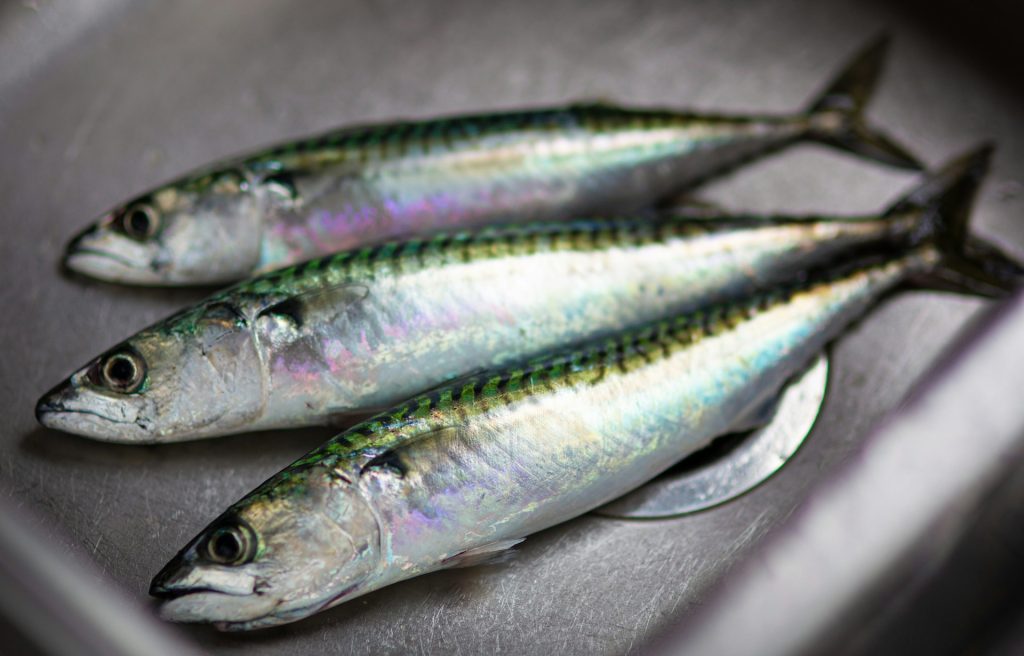
1. Oily fish — sardines, mackerel, salmon
If there is a single food worth adding to almost any dog’s bowl for joint health, it’s oily fish. Sardines and mackerel are packed with EPA and DHA — the two omega-3 fatty acids with the strongest evidence behind them for reducing joint inflammation and supporting comfortable movement.
EPA in particular is what your dog’s body uses to dampen the inflammatory signalling that causes joint pain and swelling. It’s also brilliant for skin, coat, brain, and heart — joint health is rarely the only thing it improves.
How to feed: A small tin of sardines in spring water (never brine or oil) two or three times a week is a sensible amount for a medium dog. Drain and mash into their normal meal. For a 10kg dog, half a small tin a couple of times a week is plenty. Always start small to check tolerance.
Watch out for: Tuna isn’t a substitute — it’s much lower in omega-3 and higher in mercury. Stick with sardines, mackerel, salmon, or anchovies.
2. Green-lipped mussel
Green-lipped mussel (GLM) is one of the few ingredients that delivers on three fronts at once. It contains omega-3 fatty acids, naturally occurring glucosamine and chondroitin, and a unique fatty acid profile that has been shown to support joint comfort specifically.
It comes from New Zealand, where the shellfish industry developed it after noticing the local Maori population — who ate a lot of mussels — had remarkably low rates of arthritis. The research that followed is why GLM now appears in serious joint supplements rather than just on dinner plates.
How to feed: Fresh GLM is rare in the UK, so most dogs get it through a quality joint supplement that uses freeze-dried green-lipped mussel powder. That preserves the active compounds far better than cooking them, which destroys most of what makes GLM useful.
3. Bone broth
Bone broth is one of the most underrated additions to a dog’s diet. Slow-simmered beef, chicken, or lamb bones release collagen, glucosamine, chondroitin, hyaluronic acid, and a host of minerals straight into the broth. It’s hydrating, gut-friendly, and most dogs absolutely love it.
The collagen is the headline. As dogs age, their natural collagen production drops, and the cartilage, tendons, and ligaments that depend on it can start to thin. Drinking the building blocks back in helps the body keep up.
How to feed: Make your own (the cheapest and best option) or buy a dog-safe shop version with no onion, no garlic, no added salt. Pour a small amount over their food or freeze into ice cube trays for hot days. Two or three tablespoons for a medium dog is plenty.
Important: Never feed dogs cooked bones themselves. The broth is the goal, not the bones, which must be strained out.
4. Turmeric
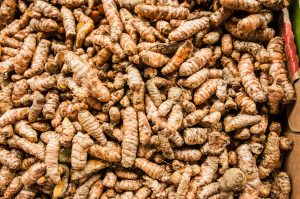
Turmeric has been used in human and animal medicine for thousands of years, and modern research has caught up with what traditional cultures already knew. The active compound — curcumin — is a genuinely powerful natural anti-inflammatory. For dogs with stiff or ageing joints, that matters.
The catch is that curcumin is poorly absorbed on its own. To get any meaningful benefit, it needs to be paired with a fat and a small amount of black pepper (piperine), which dramatically increases absorption. This is why a good joint supplement formulates turmeric properly rather than just adding raw powder.
We feel strongly enough about turmeric that it’s a deliberate part of our joint supplements — it’s not a marketing add-on, it’s one of the most evidence-backed natural anti-inflammatories available.
How to feed: A “golden paste” recipe (turmeric, coconut oil, black pepper, water) added in tiny amounts to food works well — start with a quarter teaspoon for a medium dog. Or, more reliably, choose a joint supplement that’s already done the formulation work for you.
5. Leafy greens and colourful vegetables
Spinach, kale, broccoli, and curly parsley are quietly excellent for joint health for two reasons. First, they’re rich in manganese, the trace mineral the body uses to build collagen. Second, they’re packed with antioxidants like vitamin C, vitamin E, and a range of polyphenols that help mop up the oxidative stress that contributes to joint wear over time.
Carrots, sweet potato, and butternut squash add beta-carotene. Blueberries and cranberries add anthocyanins. The variety matters more than the specific vegetable.
How to feed: Lightly steamed and chopped small, mixed into their meal. A tablespoon or two for a medium dog. Avoid onion, garlic, leeks, and grapes — all toxic to dogs.
6. Eggs
Eggs are one of the most complete proteins you can give a dog, and they bring small but useful amounts of omega-3, biotin, and selenium — all useful for joint and connective tissue health. The shells, if ground finely, are also a natural source of calcium and trace glucosamine.
How to feed: One whole egg, lightly scrambled in a dry pan with no butter or salt, two or three times a week for a medium dog. Avoid raw whites long-term — they can interfere with biotin absorption.

7. Lean, well-sourced meat
This sounds obvious, but the quality of protein in your dog’s diet has a direct effect on muscle mass — and strong muscles around a joint are one of the biggest protective factors against discomfort. A dog with weak hindquarters puts far more strain on their hips and knees than a dog with good muscle tone.
Look for diets where a named meat (chicken, beef, lamb, salmon) is the first ingredient. Avoid foods where the first few ingredients are grains, “meat derivatives”, or vague “animal protein”.
8. Pumpkin and pumpkin seeds
A small spoonful of plain cooked pumpkin (not the spiced pie filling) supports digestion — and digestion matters more for joints than most owners realise, because a healthy gut is essential for absorbing the nutrients that build cartilage in the first place. Pumpkin seeds, ground, also offer zinc and magnesium for connective tissue support.
Foods to feed less of (or avoid entirely)
This is the part most articles skip — and it matters just as much as what you add.
Highly processed kibble with vague ingredient lists. “Meat derivatives” and “cereals” tell you nothing. Cheap fillers crowd out the good stuff.
Excess omega-6 oils. Sunflower, corn, and soybean oil are heavy in omega-6, which — in excess — drives inflammation. A dog eating a kibble fried in sunflower oil and getting no omega-3 has an inflammatory ratio working against their joints every single day.
Too many treats. Even healthy ones. Weight is the single biggest controllable factor in canine joint health. A 30kg labrador carrying an extra 3kg is putting roughly an extra 12kg of force through each hip with every step on a brisk walk. Lean dogs live longer, move better, and feel better.
Table scraps with onion, garlic, grapes, raisins, chocolate, or cooked bones. All toxic or dangerous. Always.
Anything labelled “for human joint health” without checking with your vet first. Glucosamine and chondroitin doses for humans aren’t necessarily safe at canine bodyweights, and some ingredients (like xylitol-sweetened formulas) are lethal to dogs.
How to put it all together: a real-world feeding pattern
You don’t need to overhaul your dog’s diet overnight. The most sustainable approach is small, consistent additions.
A practical week for a medium-sized dog might look like:
- Base diet: A good-quality complete food with a named meat first ingredient
- Twice a week: Half a tin of sardines mixed into a meal
- Three times a week: A spoonful of steamed greens or carrot
- Daily: A teaspoon of bone broth poured over the bowl, or frozen into a cube
- Daily: A correctly formulated joint supplement covering glucosamine, chondroitin, green-lipped mussel, turmeric, and omega-3
That last point is where supplements earn their place. It is genuinely difficult to feed therapeutic levels of glucosamine, chondroitin, and green-lipped mussel through fresh food alone — you’d be feeding mussels and chicken feet daily. A properly formulated supplement closes that gap reliably, in the right doses, without the guesswork.
Where supplements fit (and where they don’t)
A supplement is not a substitute for a good diet. It’s a top-up that delivers the joint-specific ingredients fresh food can’t realistically provide in concentrated form every day.
The Canine Life Co. joint range was built around exactly this principle. Our Enhanced Adult Joint Supplement and Senior Joint Supplement combine glucosamine, chondroitin, green-lipped mussel, turmeric, and omega-3 in doses that actually do something — not the token amounts you’ll find in cheaper formulas. For dogs aged 9+ who need a stronger formulation, our Senior Max Plus steps things up further.
Everything is manufactured here in the UK, with no soy, no gluten, no wheat, and no synthetic fillers. As a family-run business that proudly supports Dogs for Autism, we genuinely care that what’s in the bottle is something we’d give our own dogs — because we do.
A few other things that matter alongside diet
Food is a huge piece of the puzzle, but joint health is built on more than just nutrition:
- Keep them lean. It’s the single biggest thing you can do for their joints.
- Walk consistently, not heroically. Two shorter daily walks are kinder to joints than one big weekend hike.
- Add gentle, regular movement. Sniffari walks, swimming, and varied terrain build the supporting muscles around the joint.
- Warm bedding. Cold, damp floors stiffen joints. A raised, well-padded bed makes a real difference, especially in winter.
- Keep nails trimmed. Long nails change a dog’s gait and put unnatural pressure on the wrist and toe joints over time.
The bottom line
The best foods for your dog’s joints aren’t exotic, expensive, or hard to find. Oily fish, bone broth, leafy greens, turmeric, and quality protein — fed consistently, in sensible amounts, alongside a well-formulated joint supplement — make a measurable difference to how your dog moves, plays, and ages.
You won’t always see the change overnight. But six to eight weeks in, you’ll notice the pause at the bottom of the stairs has shortened. The lift onto the sofa is steadier. The walk feels like a walk again.
That’s the moment all of this is for.
Ready to give your dog’s joints the support they deserve? Explore our full range of UK-manufactured natural joint supplements — formulated with the ingredients that matter, in the doses that actually work.
