
Caninelifeco Dogs Blog
How to Cool Down a Dog: 12 Tips to Keep Your Best Friend Safe in Hot Weather
Jun
It starts the way every good summer does. The back door is open, the garden smells of cut grass, and your dog is stretched out in a patch of sun looking like the happiest creature on earth. Then, an hour later, you notice the panting hasn’t stopped. The tongue is hanging a little too far. They’ve gone quiet in a way that isn’t like them.
That moment is one every dog owner in Britain knows, because our summers have a habit of creeping up fast. One week we’re moaning about the rain, the next we’re in the middle of a heatwave the country never quite seems ready for — and neither, it turns out, do our dogs.
Here’s the hard truth, said plainly because it matters: dogs don’t cope with heat the way we do, and every summer in the UK, dogs die from it. Not in dramatic, obvious ways. Often on an ordinary walk, in an ordinary garden, on an ordinary warm afternoon. The good news is that almost all of it is preventable, and none of it is complicated. This guide walks you through exactly how to keep your dog cool, calm and safe when the temperature climbs — plus the warning signs of heatstroke every owner should know by heart.
Why Dogs Struggle in the Heat (and We Don’t)
We sweat. It’s not glamorous, but it’s an astonishingly effective cooling system — our whole skin surface helps us shed heat. Dogs simply don’t have that.
A dog wears a permanent fur coat and can only lose heat in two ways: by panting, and through the small pads on their paws. That’s a tiny surface area doing an enormous job. When the air around them is already hot, panting stops working, and their body temperature can climb dangerously fast — far faster than most owners expect.
This is why a dog can go from “a bit warm” to a genuine emergency in minutes. Understanding that is half the battle. The rest is just preparation.
Know the Warning Signs of Heatstroke First
Before the tips, learn these. If you only take one thing from this article, make it this section — recognising heatstroke early is what saves lives.
Watch for:
- Heavy, frantic panting that doesn’t settle when your dog rests
- Thick, sticky drool or excessive salivating
- Bright red or very pale gums
- Lethargy, stumbling, or seeming disoriented or “drunk” on their feet
- Vomiting or diarrhoea, sometimes with blood
- Collapse, tremors, or seizures in severe cases
If you see the milder signs, act immediately to cool your dog (see our emergency steps further down). If you see the severe ones, this is a 999-for-dogs situation — cool them and get to a vet at once. Heatstroke is always an emergency, and minutes matter.
12 Ways to Keep Your Dog Cool in Hot Weather
1. Change When You Walk — Not Just Whether You Walk
Your dog will give you that look. The one that says “Why are we just sitting here?” But on a hot day, you’re the grown-up, and you know why.
Swap the midday and early-afternoon walks for a cool early-morning stroll and a late-evening amble once the sun’s lost its sting. If your routine genuinely can’t shift, shorten the walk dramatically and stick to shade.
The seven-second pavement test: Press the back of your hand flat against the pavement and hold it for seven seconds. If you can’t keep it there comfortably, it’s too hot for paw pads — which will burn just as surely as your skin. As the RSPCA puts it bluntly: dogs don’t only die in hot cars, they die on hot walks. When in doubt, leave the lead on the hook.
2. Create a Cool, Shady Den at Home
Move your dog’s bed out of any sunny spot and into the coolest part of the house — usually a tiled kitchen or bathroom floor, a hallway, or somewhere with a through-draught. Swap thick blankets for a thin towel they can stretch out on.
If your dog sleeps in a crate, drape damp towels over the top and sides to make a cool, shaded den. Hard floors like tile and stone naturally pull heat away from the body, so don’t be surprised if your dog abandons their plush bed for the bathroom lino — they know what they’re doing.
3. Build Yourself a DIY Air Conditioner
No air con? You can make a brilliant stand-in. Freeze a large container of water — an old ice-cream tub is perfect — and set it in front of a fan angled towards your dog’s resting spot. As the ice melts, the fan pushes a steady current of cool air over them.
One safety note: place the fan up high or somewhere your dog can’t knock it over, and angle it downwards. And if you do have air con, the rule is simple — if your dog’s home, it’s on.
4. Choose Cooling Walk Routes
When you do head out, think about where as much as when. Shaded woodland trails stay far cooler than open fields and scorching pavements. Better still, head for water.
A beach, a lake, a dog-friendly river spot, or even a shallow stream gives your dog the chance to wade, paddle or swim — the fastest, happiest way for them to cool their whole body at once. Just keep an eye on strong currents and always rinse off salt or chlorine afterwards.
5. Offer a Gentle Cool-Down (Their Way)
Some dogs adore a paddling pool; others look at one like you’ve personally betrayed them. Meet them where they are.
For the water-lovers, a cheap shell-style paddling pool in the shade is summer bliss. For the more sceptical, a damp washcloth or a quick, gentle hose-down across the belly, chest, inner thighs and paws does the job without the drama of a full bath. These areas, where the blood runs close to the surface, cool the fastest.
Important: Use cool water, never ice-cold. Shocking a hot dog with freezing water can constrict the blood vessels near the skin and actually trap heat inside — the opposite of what you want.
6. Keep Fresh, Cool Water Everywhere
Obvious, but worth saying: top up the water bowl constantly and pop a couple of ice cubes in to keep it cool (most dogs love crunching them, too). On hot days, put out several bowls around the house and garden so a drink is never more than a few steps away. If you’re heading out, take a collapsible travel bowl and water — don’t rely on finding any.
7. Make Frozen Treats They’ll Love
Cooling from the inside is one of the easiest wins of summer, and the kitchen does most of the work.
Try freezing low-salt dog-safe broth in an ice-cube tray, blending plain unsweetened yoghurt with banana and a few dog-safe berries into little frozen pots, or stuffing a rubber toy with their normal food and freezing it solid for a long, cooling chew. A frozen lick mat smeared with something tasty will keep an excitable dog happily occupied — and out of the sun — for ages.
(Never give human ice cream — it’s far too sugary and many dogs can’t handle dairy well — and always check that any fruit you use is safe for dogs.)
8. Don’t Skip the Summer Grooming
A good brush-out matters more in summer than people realise. Removing loose, dead undercoat helps air move against the skin instead of being trapped by a thick, matted layer.
But here’s the part that surprises owners: do not shave a double-coated breed like a Husky, Golden Retriever, German Shepherd or Border Collie. That coat insulates against heat as well as cold, and shaving it can leave your dog more exposed to the sun and at higher risk of overheating, as well as ruining the coat’s natural regrowth. Brush thoroughly, yes. Reach for the clippers, no.
9. Try a Cooling Coat, Mat or Bandana
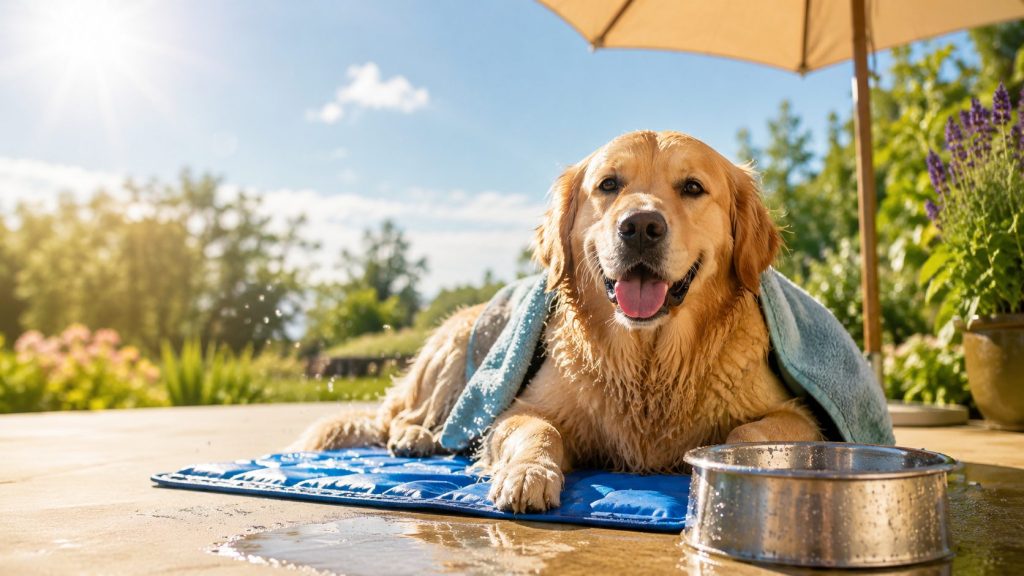
A little kit goes a long way. Cooling coats and vests work by holding evaporating water against the body; a cooling mat gives your dog a chilled surface to flop onto; and a wet bandana tied loosely around the neck offers low-effort relief on a walk. None of these replace shade and water — but on a hot day, they help.
10. Watch the Garden, Not Just the House
Gardens turn into heat traps. Make sure there’s reliable, all-day shade your dog can reach — and remember that a patch of shade at 10am is full sun by 2pm. A child’s pop-up gazebo, a shaded patio or a tree all work. And as tempting as it is to throw the ball, skip the garden games on hot days. A frantic game of fetch generates exactly the kind of exertion that tips a warm dog into trouble.
11. Never, Ever Leave Your Dog in a Car
It bears its own point because it’s the one that kills most often. On a 22°C day — a pleasant British afternoon — the inside of a car can hit 47°C within an hour. Cracking a window does almost nothing.
“Not long” is long enough. There is no safe version of leaving a dog in a parked car in warm weather. If you see a dog in distress in a hot car, call 999.
12. Pay Extra Attention to Your Higher-Risk Dogs
Some dogs feel the heat far more than others, and they need closer watching:
- Flat-faced (brachycephalic) breeds — Bulldogs, Pugs, French Bulldogs, Boxers — whose short airways make panting much less effective
- Senior dogs, who regulate temperature less efficiently and tire faster
- Puppies, who are still developing
- Overweight dogs, who carry extra insulation and strain
- Dogs with thick double coats or existing heart and breathing conditions
For our older dogs especially, summer can be a delicate balance. Stiff, aching joints already make movement harder, and the heat only adds to it — which is exactly why keeping senior dogs comfortable and gently mobile matters so much. A daily joint supplement like our British-made Senior Dog Joint Supplement supports the cushioning and flexibility ageing joints rely on, helping your old friend stay steady on those cooler morning strolls rather than seizing up on the sofa. Pair it with shade, water and a sensible routine, and you’ve given them the best possible summer.
What to Do If Your Dog Overheats
If you spot the warning signs, act fast — and in this order:
- Move them somewhere cool and shaded immediately, ideally indoors with a draught or fan.
- Offer small amounts of cool (not iced) water to drink. Don’t force it.
- Wet their body with cool — never freezing — water, focusing on the belly, chest, inner thighs and paws. A wet towel placed under them, not over them, lets heat escape.
- Keep air moving over the damp fur with a fan or by fanning them yourself — this is what does the cooling.
- Call your vet straight away, even if they seem to be recovering. The internal damage from heatstroke isn’t always visible, and a vet check can catch problems early.
Cool first, then transport. Begin cooling at home or wherever you are, and keep cooling on the way to the vet if you can.
A Note on the British Heatwave
We’re not built for it — and neither are our dogs. Our houses are designed to keep heat in, our summers arrive without warning, and most of us underestimate just how quickly a warm day becomes a dangerous one for a dog.
So treat the first hot week of the year as the reminder it is. Fill the freezer with treats, find the cool corner of the house, shift the walks to dawn and dusk, and keep that water topped up. None of it is hard. All of it works. And it means that when the sun finally does come out, the only thing you and your dog have to worry about is which patch of shade to enjoy it from.
Because at the end of the day, it all comes back to the same thing — taking care of the ones you love. Your dog’s health matters, every single day of the year, sunshine or not.
Frequently Asked Questions
What temperature is too hot to walk a dog in the UK? As a guide, take real care above 20°C and avoid walks entirely above 24°C, especially for flat-faced, older, overweight or thick-coated dogs. Always use the seven-second pavement test before heading out — if it’s too hot for your hand, it’s too hot for their paws.
How can I tell if my dog is too hot? Heavy, relentless panting that doesn’t settle with rest, thick drool, bright red or very pale gums, lethargy or stumbling, and vomiting are all warning signs. If you see them, start cooling your dog immediately and contact your vet.
Can I put ice cubes in my dog’s water? Yes. The old myth that ice cubes are dangerous has been debunked — a few cubes in the water bowl are a perfectly safe and welcome way to keep it cool, and most dogs enjoy them.
Should I shave my dog in summer? Not if they’re a double-coated breed. That coat insulates against heat as well as cold, so shaving can leave them more vulnerable to overheating and sunburn. Brush out the loose undercoat thoroughly instead.
Why can’t I use ice-cold water to cool my dog? Very cold water can cause the surface blood vessels to constrict, trapping heat inside the body. Use cool water and keep air moving over the damp fur — that’s what cools a dog down safely and effectively.
Canine Life Co. is a family-run, British dog supplement brand, proud charity partner of Dogs for Autism. Everything we make is crafted to help your dog live a longer, happier, more comfortable life — because your dog’s health matters.
