
Caninelifeco Dogs Blog
Dog Skin Issues and the Signs to Look Out For
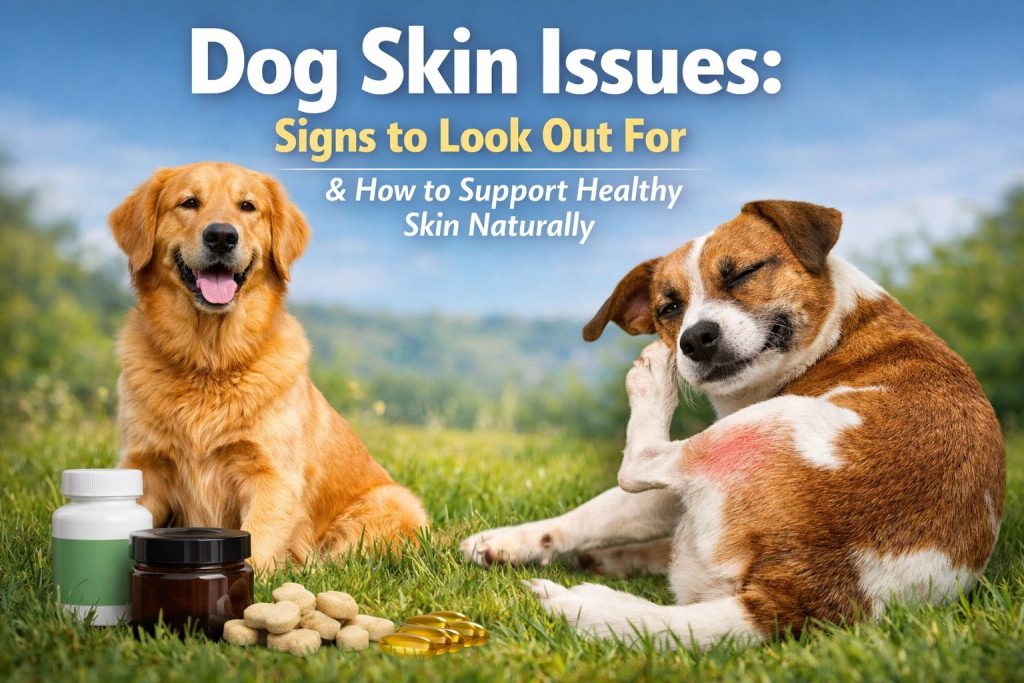
Feb
A dog’s skin and coat are about far more than appearance — they’re one of the clearest windows into your dog’s overall health.
Healthy skin should be smooth, soft, and free from redness, sores, or excessive flakes. A healthy coat should look shiny, feel full, and not be greasy, dull, or patchy. When something changes, it’s often one of the first signals that your dog’s body needs extra support.
At Canine Life Co, we work with thousands of dog owners who notice subtle changes like itching, paw licking, or flaky skin long before a serious problem develops. The earlier you spot the signs, the easier it is to support your dog’s skin from the inside out.
In this guide, we’ll cover:
-
The most common dog skin issues
-
What causes them
-
The early warning signs to watch for
-
How nutrition and supplements can help support healthy skin and coat
Why Your Dog’s Skin Health Matters
Your dog’s skin is their largest organ. It acts as a protective barrier against:
-
Bacteria
-
Allergens
-
Parasites
-
Environmental irritants
When that barrier becomes weakened or inflamed, problems can escalate quickly. What starts as “a bit of itching” can turn into infections, hair loss, and long-term discomfort.
Untreated skin issues can lead to:
-
Constant itching and irritation
-
Open sores and secondary infections
-
Hair thinning or bald patches
-
Behaviour changes due to discomfort
-
Ongoing vet visits and medication
Supporting skin health early — especially through proper nutrition and targeted supplements — can make a huge difference.
Common Dog Skin Issues
1. Allergic Skin Disease (Canine Atopic Dermatitis)
Allergies are one of the top causes of skin problems in dogs. Just like humans, dogs can react to things in their environment or diet.
Common triggers include:
-
Grass and pollen
-
Dust mites
-
Mould spores
-
Certain foods (such as beef, chicken, dairy, or wheat)
-
Flea bites (flea allergy dermatitis)
When a dog has allergies, their immune system overreacts, causing inflammation in the skin.
Typical signs of allergies:
-
Persistent scratching, licking, or chewing
-
Red or inflamed skin
-
Frequent ear problems
-
Paw licking or chewing
-
Rubbing their face on carpets or furniture
-
Recurring skin infections
Allergies are often long-term, but many dogs benefit from skin-supporting nutrients that help strengthen the skin barrier.
Support your dog’s skin from within with our Omega-rich Hemp Oil For Dogs
2. Fleas and Parasites
Fleas may be tiny, but their impact on your dog’s skin can be huge. Some dogs are so sensitive that one bite can trigger intense itching.
Signs of flea-related skin problems:
-
Severe itching, especially near the base of the tail
-
Hair loss around the back end
-
Small red bumps or scabs
-
Restlessness
-
“Flea dirt” (tiny black specks) in the coat
Mites can also cause skin disease (mange), leading to:
-
Patchy hair loss
-
Crusty or thickened skin
-
Red, irritated areas
While parasite prevention is essential, skin can still need extra nutritional support after irritation.
3. Bacterial Skin Infections (Pyoderma)
When a dog scratches a lot — often due to allergies — the skin barrier breaks. This gives bacteria the chance to grow and cause infection.
Signs of bacterial skin infections:
-
Red, irritated patches
-
Pimples or pus-filled spots
-
Scabs and crusts
-
Unpleasant odour
-
Circular patches of hair loss
These infections are often secondary, meaning the root cause (like allergies or poor skin health) still needs addressing.
Proper fatty acids and skin-support nutrients can help strengthen the skin’s natural defences.
4. Yeast Skin Infections
Yeast naturally lives on your dog’s skin, but when conditions are warm, moist, and inflamed, it can overgrow.
Yeast infections commonly affect:
-
Ears
-
Paws
-
Skin folds
-
Armpits and groin
Common signs:
-
Greasy or oily skin
-
A strong, musty smell (often compared to corn chips)
-
Red or darkened skin
-
Constant paw licking
-
Thickened skin over time
Yeast problems are frequently linked to allergies and immune imbalance — areas where nutritional support can play a role.
5. Hot Spots (Acute Moist Dermatitis)
Hot spots are painful, fast-developing areas of inflamed, infected skin. They can appear suddenly and spread quickly.
They’re often triggered by:
-
Flea bites
-
Allergies
-
Excessive licking or scratching
-
Moisture trapped in thick fur
Hot spot signs include:
-
A raw, red, oozing patch
-
Rapid hair loss in one area
-
Pain when touched
-
Constant licking or biting
Hot spots need veterinary care, but long term, improving overall skin resilience can help reduce flare-ups.
6. Dry Skin and Dandruff
Flaky skin isn’t always serious, but it’s a sign the skin barrier may not be functioning at its best.
Possible causes include:
-
Low humidity (especially in winter)
-
Poor diet
-
Over-bathing with harsh shampoos
-
Underlying health issues
Watch for:
-
White flakes in the coat
-
Dull or brittle fur
-
Mild itching
-
Rough or scaly skin
Essential fatty acids are especially important here, as they help keep skin hydrated and supple.
7. Hormonal Skin Conditions
Some skin problems come from inside the body rather than the environment.
Two common hormonal disorders linked to skin changes are:
-
Hypothyroidism
-
Cushing’s disease
Signs may include:
-
Hair loss on both sides of the body
-
Thin or fragile skin
-
Darkened patches
-
Slow hair regrowth
-
Lethargy or weight changes
These require veterinary diagnosis, but good nutrition still plays a supportive role in skin and coat quality.
Key Signs of Skin Problems Every Dog Owner Should Watch For
Catching skin issues early can prevent months of discomfort. Keep an eye out for:
Excessive Scratching
Occasional scratching is normal. Frequent, intense scratching — especially at night — is not.
Constant Licking or Chewing
Dogs often focus on itchy paws, legs, or their belly.
Red or Inflamed Skin
Healthy skin should be pale pink or pigmented — not bright red.
Hair Loss
Bald patches, thinning fur, or brittle hair can signal underlying issues.
Scabs, Sores, or Crusts
Often caused by scratching, but may indicate infection or parasites.
Unusual Smell
A strong odour from the skin or ears often points to yeast or bacteria.
Changes in Skin Colour or Thickness
Darkened, thick, or leathery skin can develop with long-term inflammation.
Head Shaking or Ear Scratching
Skin issues and ear problems frequently go hand in hand.
When to See the Vet
You should contact your vet if:
-
Itching lasts more than a few days
-
Skin looks red, raw, or infected
-
There is sudden hair loss
-
Your dog seems in pain
-
Skin issues keep returning
-
There is discharge or a bad smell
Supplements can support skin health, but infections, parasites, and hormonal problems need proper diagnosis.
How to Support Healthy Skin in Dogs Naturally
While some skin issues require medical treatment, daily care makes a huge difference.
Feed a Nutrient-Rich Diet
Skin health depends on:
-
Omega-3 and omega-6 fatty acids
-
High-quality protein
-
Vitamins A and E
-
Zinc and other trace minerals
Add Targeted Skin Supplements
Many dogs benefit from additional skin-support nutrients, especially those prone to allergies or dryness.
Stay Consistent With Flea Prevention
Even indoor dogs can get fleas.
Use Gentle Grooming Products
Avoid harsh shampoos that strip natural oils.
Groom Regularly
Brushing improves circulation and helps you spot problems early.
Maintain a Healthy Weight
Excess weight can increase inflammation and skin fold issues.
The Importance of Early Detection
Skin problems rarely resolve on their own. They usually worsen over time, leading to chronic irritation and repeated infections.
By noticing small changes — slightly more scratching, a duller coat, a new smell — you can act early and support your dog before the issue escalates.
Your dog can’t tell you they’re itchy. But their skin will.
Final Thoughts
Dog skin issues are common, but they should never be ignored. From allergies and parasites to infections and hormonal imbalances, there are many possible causes — and most are manageable with the right care.
As a dog owner, watch for:
-
Increased scratching or licking
-
Redness or inflammation
-
Hair loss
-
Unusual smells
-
Scabs or sores
Alongside veterinary care where needed, supporting skin health through targeted nutrition and supplements can help keep your dog comfortable, shiny-coated, and itch-free.
